

Afghan Traditional Clothing Heritage Preservation
Table of Contents
- Understanding Afghan Traditional Clothing and Its Cultural Roots
- Afghan Traditional Dress: Garments for Men and Women
- Afghan Embroidery: Textile Craftsmanship and Techniques
- How to Care for Embroidered Clothing and Preserve Garments
- Authentic Afghan-Inspired Clothing: Identifying Quality and Craftsmanship
- Preserving Cultural Heritage Through Intergenerational Knowledge Transfer
- Blending Heritage with Modern Style: Wearing Afghan Traditional Clothing Today
- Frequently Asked Questions
Last Updated: October 11, 2026
Understanding Afghan Traditional Clothing and Its Cultural Roots
Afghan traditional clothing represents far more than fashion, it embodies centuries of cultural identity, regional pride, and artistic heritage. At Luqmaan Boutique, we recognize that Afghan traditional clothing serves as a living archive of Afghanistan's diverse ethnic communities, each with distinct design languages, embroidery techniques, and symbolic meanings woven into every garment.
The clothing traditions of Afghanistan developed through layers of history: ancient Silk Road trade routes, Persian and Central Asian influences, Islamic artistic principles, and the practical needs of Afghanistan's varied climates and terrain. Each region developed signature styles that reflected both environmental conditions and cultural values.
Regional and Ethnic Diversity in Afghan Dress
Afghanistan's clothing traditions cannot be understood as monolithic. The Pashtun communities of the south and east favor different silhouettes and embroidery patterns than the Hazara people of central Afghanistan or the Tajik communities of the north. The Kuchi nomadic groups developed portable, durable garments suited to pastoral life.
Each ethnic group's traditional dress tells a story of identity and belonging. Pashtun garments often feature bold geometric embroidery in deep jewel tones. Hazara dress incorporates intricate patterns influenced by Persian aesthetics. Tajik clothing emphasizes elegant draping and subtle embellishment.
Clothing as Expression of Identity and Heritage
For Afghan communities worldwide, traditional clothing functions as tangible connection to homeland, family history, and cultural continuity. Wearing Afghan traditional dress at weddings, Eid celebrations, and family gatherings affirms cultural identity across generations and geographic distances. This is especially significant for diaspora communities maintaining heritage while navigating life in new countries.
The act of wearing traditional garments carries emotional and social weight. It signals respect for ancestors, commitment to cultural preservation, and pride in heritage.
Afghan Traditional Dress: Garments for Men and Women
Men's Traditional Garments
The Perahan Tunban represents the cornerstone of Afghan men's formal dress. The Handmade Afghan Selmadozi Embroidered Men's Perahan Tunban from Luqmaan Boutique exemplifies this traditional construction, featuring hand-stitched metallic embroidery across the chest and sleeves in colors like black with gold, ivory with gold, or white with white detailing.

The Chapan or Patu is a long, often quilted or embroidered coat worn over the Perahan Tunban for added warmth and formality. The Pakol, a traditional wool cap, completes the ensemble. For winter wear or travel, the handcrafted wool Pakol in natural cream provides authentic cultural styling while offering genuine warmth.
Women's Traditional Garments
Women's Afghan dress encompasses several distinct garment types, each suited to different occasions and regions. The Kuchi dress, worn by nomadic and settled communities alike, features a heavily embroidered tunic paired with matching trousers. The Kandahari dress, associated with Kandahar and surrounding regions, typically features rich embroidery in contrasting colors and is often worn for celebrations.
The Chador, a large rectangular fabric worn as a head covering and shoulder wrap, provides both modesty and elegance. Many women pair traditional dresses with jewelry sets that enhance the overall aesthetic.
Afghan Embroidery: Textile Craftsmanship and Techniques
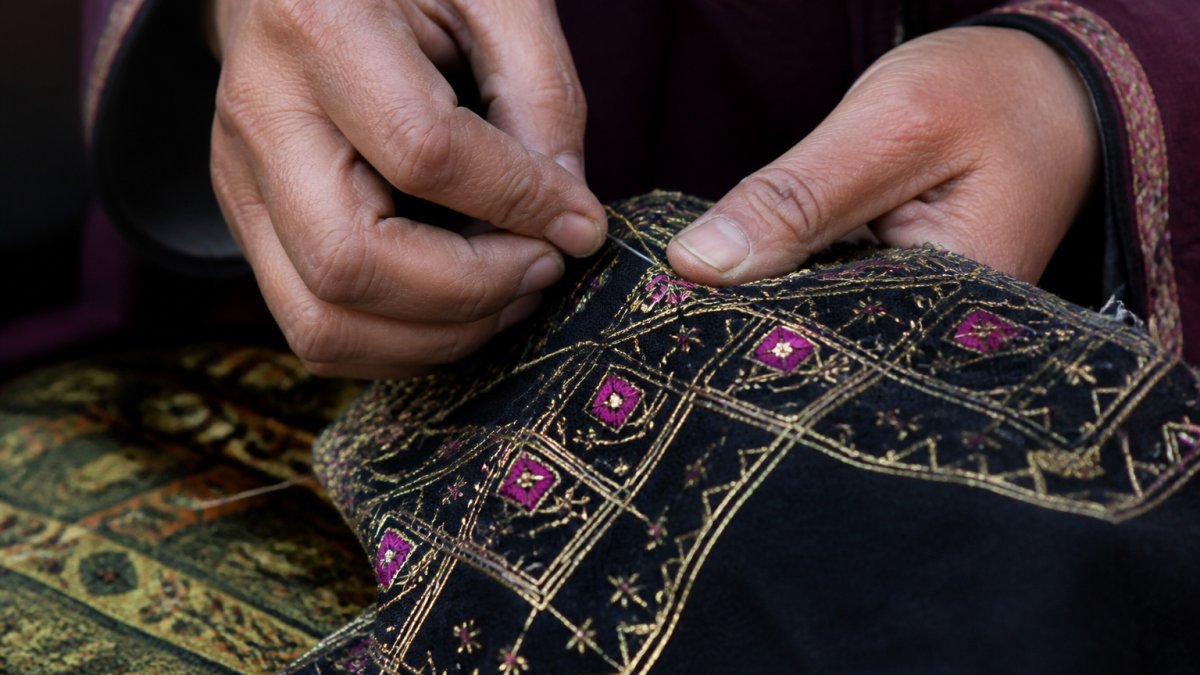
Selmadozi and Khamak Embroidery Traditions
Selmadozi (also spelled Salma Dozi) represents one of Afghanistan's most celebrated embroidery arts. This technique involves hand-stitching fine metallic coils or threads onto fabric to create raised, shimmering designs. Each stitch is placed individually by skilled artisans, making Selmadozi extraordinarily labor-intensive and time-consuming.
Khamak embroidery employs a different approach, using wrapped thread to create dimensional patterns. This technique produces bold, textured designs that remain visible and tactile even when viewed from a distance. Khamak-inspired designs often feature geometric motifs and are commonly seen on wedding attire and ceremonial garments.
Patterns, Colors, and Decorative Details
Afghan embroidery patterns carry symbolic meaning rooted in cultural and spiritual traditions. Geometric designs represent stability and order. Floral motifs symbolize growth, renewal, and beauty. Diamond shapes often reference protection and strength.
Color selection in Afghan embroidery reflects both aesthetic preferences and practical considerations. Deep jewel tones, emerald green, sapphire blue, ruby red, and rich purple, dominate traditional palettes, chosen partly because they hide soil and wear well in harsh environments. Gold and silver metallic threads add luxury and catch light during celebrations.
How to Care for Embroidered Clothing and Preserve Garments
Cleaning and Storage Best Practices
Hand-embroidered garments require careful handling to preserve both fabric and decorative elements. For regular maintenance, gentle hand-washing in cool water with mild detergent is preferable to machine washing. The Men's Designer Hand-Embroidered Parahan Tunban with Shawl recommends machine washing on a cold, gentle cycle, though hand washing provides additional protection for metallic embroidery.

Storage significantly impacts garment longevity. Embroidered clothing should be stored in breathable fabric bags rather than plastic, which traps moisture and encourages mildew. Acid-free tissue paper placed between folds prevents creasing and protects delicate stitching. Store garments in cool, dry locations away from direct sunlight, which can fade colors over time.
Addressing Common Damage and Repairs
Minor loose threads should be carefully secured by hand rather than cut. Pulled threads can sometimes be gently worked back into place using a fine needle. For more significant damage, tears in fabric or broken embroidery stitches, consult artisans experienced in Afghan textile repair. Attempting amateur repairs on valuable pieces can worsen damage and diminish authenticity.
Stains require prompt attention. Fresh stains should be gently blotted rather than rubbed. For set-in stains, professional cleaning by specialists familiar with embroidered textiles is recommended. Metallic embroidery threads can tarnish over time; gentle brushing with a soft cloth occasionally helps maintain luster without damaging stitches.
Handmade Afghan Selmadozi Embroidered Men’s Perahan Tunban – Luxury Traditional →
Authentic Afghan-Inspired Clothing: Identifying Quality and Craftsmanship
Handcrafted Versus Machine-Made Embroidery
The distinction between handcrafted and machine-made embroidery significantly affects both authenticity and value. Handcrafted Selmadozi embroidery displays subtle variations in stitch length and spacing, evidence of individual artisan technique. Each metallic coil is placed by hand, creating dimensional effects that catch light differently depending on viewing angle.
Examining embroidery closely reveals construction method. Handcrafted work shows evidence of individual stitches, occasional irregularities that reflect human skill rather than mechanical precision, and three-dimensional depth. The back of handcrafted embroidery displays knots and thread management techniques unique to individual artisans.
Material Quality and Construction Standards
Premium Afghan traditional clothing uses natural, durable fabrics suited to the garment's purpose. Cotton provides breathability for warm-weather wear. Wool offers warmth and durability for winter pieces. Silk or silk blends add luxury and drape to formal garments.
Construction quality extends beyond fabric to seaming, hemming, and overall garment structure. Hand-stitched seams indicate attention to detail and durability. Reinforced stress points, like armholes and waistbands, signal garments built to withstand years of wear. Loose threads, uneven hems, or weak seaming indicate rushed production prioritizing cost over quality.
| Quality Indicator | Handcrafted/Premium | Machine-Made/Standard |
|---|---|---|
| Embroidery | Hand-stitched metallic threads, dimensional, irregular stitching | Uniform machine patterns, flat appearance |
| Fabric | Natural fibers (cotton, wool, silk), breathable | Synthetic blends, less breathable |
| Seams | Hand-stitched or reinforced machine seams | Basic machine seaming |
| Construction | Reinforced stress points, attention to detail | Standard construction |
| Durability | Years of wear with proper care | Limited lifespan |
Preserving Cultural Heritage Through Intergenerational Knowledge Transfer
Oral Histories and Artisan Communities
The knowledge embedded in Afghan embroidery techniques, garment construction, and design traditions exists primarily through oral transmission from experienced artisans to younger learners. Master embroiderers teach apprentices through demonstration and hands-on practice rather than written instruction.
Displacement, migration, and economic pressures threaten this knowledge transfer system. When artisans cannot find apprentices or cannot support themselves through traditional craftsmanship, techniques risk disappearing within a generation. Diaspora communities face particular challenges maintaining these knowledge networks across geographic distances. Supporting artisans through purchasing authentic handcrafted pieces directly contributes to preserving these traditions and ensuring knowledge transfer continues.
Diaspora-Led Documentation and Digital Archives
Afghan diaspora communities increasingly document traditional clothing knowledge through digital platforms, video archives, and community-led initiatives. These efforts create permanent records of techniques, patterns, and cultural contexts that might otherwise be lost. Digital archives allow geographically dispersed community members to access knowledge, connect with heritage, and teach younger generations despite physical distance.
Ethical documentation requires community consent and benefit-sharing. The most effective preservation initiatives center Afghan voices and ensure that community members control how their cultural knowledge is represented and used. This approach contrasts with extractive documentation that treats cultural knowledge as raw material for external consumption.
Blending Heritage with Modern Style: Wearing Afghan Traditional Clothing Today
Contemporary Afghan fashion increasingly blends traditional elements with modern silhouettes and styling. Young Afghan designers incorporate Khamak-inspired embroidery into contemporary cuts, creating pieces that honor heritage while reflecting current aesthetic sensibilities.
Mixing traditional and contemporary elements requires intentional choices. Pairing a traditional embroidered tunic with modern trousers creates cultural expression while maintaining contemporary styling. Wearing traditional jewelry with Western formal wear signals heritage without requiring complete costume. This flexibility allows Afghan traditional clothing to remain living tradition rather than historical artifact reserved only for ceremonial occasions.
Afghan traditional clothing represents centuries of cultural evolution, artistic mastery, and community identity. Explore our collections of premium garments for men, women, and children, each piece crafted to elevate your personal style with timeless elegance and authentic cultural expression. Learn more about Afghan cultural heritage and textile traditions to deepen your understanding of these remarkable artistic traditions.
Frequently Asked Questions
What makes Afghan traditional clothing distinct from other regional dress?
Afghan traditional clothing reflects centuries of cultural, religious, and geographic influences, distinguished by intricate hand embroidery, bold color palettes, and garment silhouettes that vary by ethnic group. The Pashtun perahan tunban, Hazara embroidered dresses, and Kuchi tribal attire each carry unique design elements and historical significance. These garments serve as living expressions of identity, preserving heritage through handcrafted details like Selmadozi metallic embroidery and traditional patterns passed down through generations.
How can I identify authentic Afghan-inspired clothing versus mass-produced copies?
Authentic Afghan-inspired clothing features hand-stitched embroidery with visible irregularities that reflect artisan work, premium natural fabrics, and construction that prioritizes durability over cost. Examine the embroidery closely: genuine Selmadozi and Khamak work shows raised, dimensional stitching with metallic thread individually placed by hand. Check seams for quality finishing, inspect fabric weight and fiber content, and verify the garment's origin through transparent sourcing practices. Reputable retailers provide detailed descriptions of embroidery techniques and artisan backgrounds.
What is the best way to care for embroidered Afghan garments?
Hand wash embroidered Afghan clothing in cool water with mild detergent, avoiding bleach and harsh chemicals that damage metallic threads and dyes. Gently squeeze water through fabric rather than rubbing or wringing. Lay flat or hang to air dry away from direct sunlight and heat sources. Store in breathable cotton garment bags in cool, dry conditions to prevent moisture and pest damage. For delicate pieces with extensive embroidery, professional dry cleaning by specialists familiar with traditional textiles is recommended to preserve intricate details.
How do embroidery techniques help preserve Afghan cultural traditions?
Embroidery techniques like Selmadozi, Khamak, and regional stitching methods represent centuries of accumulated knowledge and artistic expression. When artisans continue practicing these handcrafted traditions, they maintain living connections to ancestral skills and cultural identity. Wearing and caring for embroidered garments supports artisan communities, particularly women whose labor sustains these practices. Documenting and teaching embroidery methods ensures knowledge transfer to younger generations, creating economic incentives for cultural preservation and preventing the loss of irreplaceable textile heritage.
Can modern Afghan-inspired clothing work for everyday wear, or is it only for special occasions?
Afghan-inspired clothing blends beautifully into modern wardrobes for both everyday and formal occasions. Simpler embroidered pieces with minimal detailing work well for daily wear when paired with contemporary accessories and silhouettes. More elaborate garments with extensive hand embroidery suit weddings, religious celebrations, and formal events. Many contemporary designs feature refined tailoring and moderate embroidery placement that transitions seamlessly between cultural celebrations and professional settings, allowing wearers to honor heritage while maintaining modern style preferences.
What is the cultural significance of different embroidery patterns in Afghan clothing?
Afghan embroidery patterns carry deep cultural and regional meaning. Geometric designs often reflect tribal identity and geographic origin, while floral motifs symbolize beauty, prosperity, and connection to nature. Colors hold significance too: red represents courage and vitality, green symbolizes Islam and renewal, and gold reflects wealth and celebration. Specific pattern combinations identify regional communities and ethnic groups, making embroidery a visual language of heritage. Understanding these symbolic elements helps wearers appreciate the cultural narratives embedded in each garment and respect the artisan traditions that preserve this visual heritage.