

Durable Traditional Clothing for Daily Wear: A 2026 Guide
Table of Contents
- Why Durable Traditional Clothing for Daily Wear Matters
- Durable Fabrics for Clothing: What Lasts Through Daily Use
- Afghan Clothing for Daily Wear: Choosing the Right Pieces
- Construction and Craftsmanship: Seams, Closures, and Embellishments
- How to Care for Embroidered Clothing and Keep It Looking New
- Comfort, Fit, and Mobility for Daily Activities
- Cost per Wear and Garment Lifespan: A Practical Buying Guide
- Ethical and Culturally Respectful Purchasing
- Frequently Asked Questions
Last Updated: October 17, 2026
Why Durable Traditional Clothing for Daily Wear Matters
Durable traditional clothing for daily wear solves a problem mass-produced fashion cannot: it holds its shape, color, and cultural meaning through years of regular use. That question matters more than ever, because the average garment now sees far fewer wears before it is discarded, according to Ellen MacArthur Foundation research on textile waste.
The answer starts with fabric, construction, and honest expectations about wear. Below: how to choose traditional garments that last, care for embroidery, and calculate real cost per wear.
Durable Fabrics for Clothing: What Lasts Through Daily Use
Durable fabrics for clothing share three traits: strong fibers, a tight weave, and enough weight to resist abrasion. Cotton and wool dominate, and animal hides remain relevant in cold-climate traditions where insulation matters more than drape.
Natural Fibers: Cotton, Wool, and Animal Hides
Cotton is the workhorse of everyday traditional dress; long-staple cotton resists pilling and holds embroidery well, which is why cotton blouses and dresses fill daily wardrobes. Wool offers natural elasticity and warmth for cool-weather skirts and layers. Animal hides, including caribou skin and sealskin in northern traditions, deliver exceptional wind resistance when properly tanned. Each fiber fails differently: cotton wears thin at stress points, wool felts if washed hot, and hides crack without conditioning.
Fabric Weight, Weave, and Breathability
Fabric weight determines behavior: lightweight weaves suit hot climates and layering, while heavier weaves resist wear and hold shape. A tight weave with clean, dense threads outlasts a loose one, which snags and distorts. Breathability matters too, a garment that traps heat gets worn less, and less wear raises cost per wear. Look for fabric that drapes without stiffness and feels substantial between your fingers.
Afghan Clothing for Daily Wear: Choosing the Right Pieces
Afghan clothing for daily wear works best built around one or two core pieces rather than a full wardrobe overhaul. The Parahan Tunban, a two-piece set of a long shirt and loose trousers, is the most practical starting point: it moves easily, layers well, and reads as traditional without looking costumed.

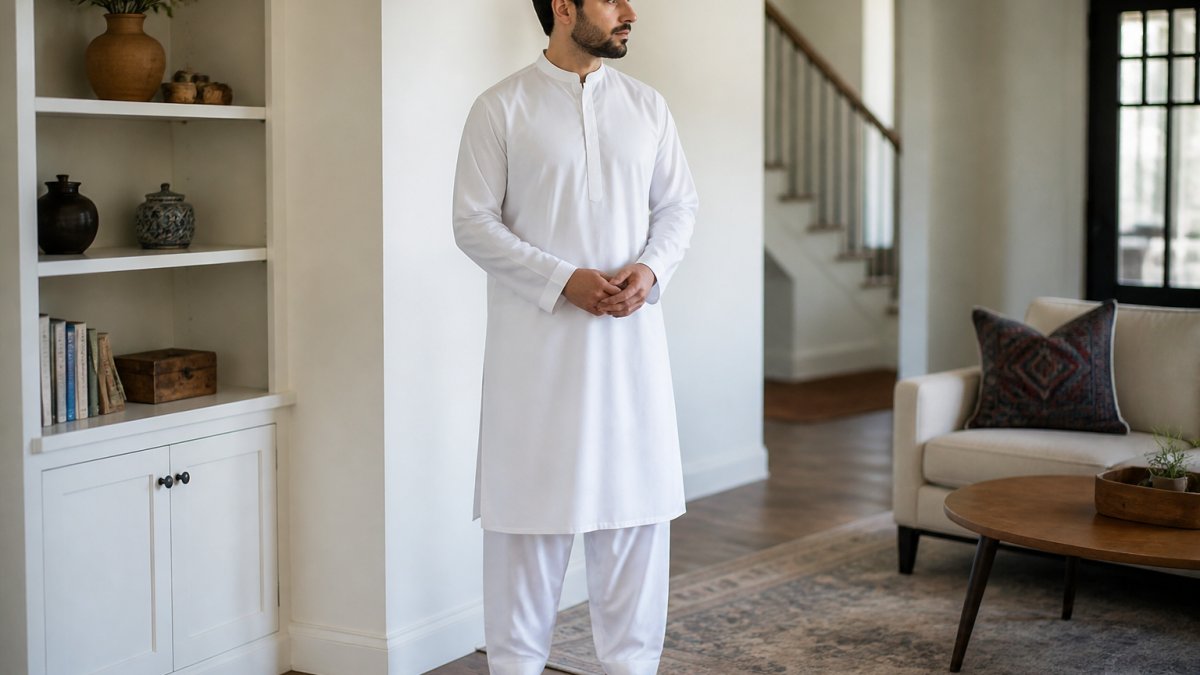
Our Men's White Qasimi Design Parahan Tunban at $79.99 is a good example of a piece built for regular rotation: a relaxed traditional fit, decorative stitched detailing at the neckline and cuffs, and machine washable construction on a cold, gentle cycle. The Black Qasimi Parahan Tunban at the same price hides everyday wear better than white, which makes it the smarter pick for frequent use.

Everyday Wear vs. Ceremonial Clothing
The split between everyday wear and ceremonial clothing comes down to fabric, embellishment, and cleanability. Ceremonial garments carry heavier hand embroidery, delicate closures, and embellishments needing careful handling; daily wear should favor simpler stitching, secure seams, and washable fabrics. Keep one or two ceremonial outfits for special occasions and rotate simpler pieces daily, that protects the delicate garments and gives you a wardrobe that actually gets worn.
Construction and Craftsmanship: Seams, Closures, and Embellishments
Construction decides durability, and the useful question is not "is this well made?" but "which construction choices wear best for how I will actually use this garment?" The table below compares the main options in traditional daily-wear pieces and the trade-offs that matter over years of rotation.
| Element | Durable option | Weaker option | Trade-off to accept |
|---|---|---|---|
| Fiber | Long-staple cotton, worsted wool, tightly spun linen blends | Short-staple cotton, loose woolen-spun yarns | Long-staple costs more upfront but pills and abrades far more slowly |
| Weave | Tight plain weave, twill, or dense dobby | Loose basket weave, open gauze | Tight weaves resist snagging but breathe less in heat |
| Seam | Flat-felled or double-stitched with reinforced stress points | Single-stitched with raw or pinked edges | Flat-felled seams add bulk at the hem and underarm |
| Lining | Breathable cotton or cupro at the yoke and placket | Fully bonded or glued interlining | Bonded interlining can bubble and delaminate after repeated washing |
| Closures | Reinforced button shanks, bar-tacked stress points, metal or corozo buttons | Glued buttons, plastic shanks, single-thread attachment | Metal buttons survive washing but can chip in dry cleaning |
| Embellishment | Hand embroidery with knotted thread tails and a stabilized backing | Machine embroidery on unstabilized fabric, loose tails | Handwork lasts but needs gentler washing and flat drying |
How Each Element Fails
Understanding failure modes tells you where to inspect. Cotton wears thin first at collar, cuffs, and underarm, where friction and perspiration concentrate; a reinforced placket and heavier yoke delay that wear. Wool felts and pills when agitated in warm water, so a worsted wool skirt outlasts a woolen-spun one. Animal hides crack at flex points like elbows and knees unless conditioned, and stitched seams outlast glued ones. Linen is strong dry but weak wet, so wash gently and never wring.
Seams fail predictably. A single-stitched side seam splits at the underarm and hip; a flat-felled seam distributes stress and resists fraying. Bar tacks at pocket mouths and placket ends stop small tears from growing. A button anchored with a thread shank sits above thick fabric and resists pulling through; one sewn flat tears the surrounding weave.
Embellishment Durability
Hand embroidery, including Khamak-style work, should be inspected on the reverse: consistent tension, knotted or woven-in tails, and a light stabilizing backing indicate work that survives washing. Loose tails catch and pull. Machine embroidery on unstabilized fabric can pucker after the first wash. Beadwork and metallic thread are least wash-tolerant; treat those pieces as occasional wear or spot-clean only.
A Quick In-Store Test
Hold the underarm seam and tug gently; a durable seam holds without gapping. Rub folded fabric between thumb and forefinger ten times; immediate pilling predicts pilling in wear. Bend the collar and placket; stiff, papery bonded interlining will likely bubble. Check for visible thread shanks and dense, cleanly cut buttonholes. These tests take under two minutes and predict most wear failures.
Men’s White Qasimi Design Parahan Tunban – Traditional Afghan 2-Piece Outfit →
How to Care for Embroidered Clothing and Keep It Looking New
Care, not wear, is where most traditional garments are lost. The three rules, wash cold, dry flat, never wring, work because heat and agitation shrink wool, distort embroidery, and break down cotton; regular wear removes far less life. The protocol below is organized by fiber and failure.
Washing by Fiber
- Cotton and cotton blends: Machine wash cold on a gentle cycle, inside out, in a mesh bag. Skip fabric softener, which coats fibers and reduces absorbency. Tumble dry low only if the garment is unembellished; otherwise lay flat.
- Wool: Hand wash cool with a pH-neutral wool detergent, or use a machine wool cycle if the label allows. Never agitate warm. Roll in a towel to remove water and dry flat, reshaping to size. Hot water and friction cause felting, which is permanent.
- Linen: Wash cool and gently; linen is strong dry but weaker wet, so avoid wringing and high spin speeds. Remove from the dryer while slightly damp and press.
Drying and Pressing
Lay embroidered and wool garments flat in shade; hanging wet embroidery stretches stitching and cloth. Reshape collars and plackets while damp. Press embroidery from the reverse on a padded surface or use a pressing cloth; never press directly over raised stitching, which flattens permanently. Steam is gentler than a hot iron for wool and blends.
Repair Before It Spreads
- Loose embroidery thread: Thread a fine needle with matching thread, anchor the tail on the reverse, and work a few securing stitches; do not pull the loose thread tight, which distorts the design.
- Split seam: Turn inside out and re-stitch along the original seam line with a backstitch, then reinforce the ends with a bar tack.
- Loose button: Reattach with a thread shank, sew through the button holes over a matchstick, then wrap the thread around the stem and knot.
Storage That Preserves Fiber
Store folded with acid-free tissue, never on wire hangers, which distort shoulders and leave rust marks. Air garments between wears to reduce washing. Use breathable cotton bags, not sealed plastic, which traps moisture and causes mildew and thread rot. Cedar blocks deter insects without mothball residue. Rotate storage seasonally and refold along different lines to avoid permanent creases.
A Simple Care Calendar
- After each wear: Air for a few hours, brush lightly, and hang or fold.
- Monthly: Check seams, buttons, and embroidery tails; mend anything loose.
- Seasonally: Wash or dry-clean according to fiber, condition leather, and refresh storage with cedar.
Comfort, Fit, and Mobility for Daily Activities
Comfort decides whether a traditional garment becomes everyday wear or stays in the closet. Fit should allow full range of motion: raise your arms, sit, and bend before committing. A relaxed traditional fit is not an oversized one, look for room through chest and shoulders without excess fabric that catches on doors or chairs. Breathability, fabric weight, and seam placement all affect how a garment feels after eight hours.
Cost per Wear and Garment Lifespan: A Practical Buying Guide
Cost per wear is purchase price divided by actual wears. A $79.99 Parahan Tunban worn twice a week for two years works out to well under a dollar per wear; a cheaper piece that loses shape after a season costs far more in practice.
| Garment Type | Typical Price | Expected Lifespan | Wears per Year | Cost per Wear |
|---|---|---|---|---|
| Basic mass-market top | $20-$30 | 1-2 years | 40 | $0.50-$0.75 |
| Mid-range traditional set | $70-$80 | 3-5 years | 60 | $0.25-$0.45 |
| Embroidered ceremonial piece | $100-$110 | 5+ years with care | 12 | $1.70-$1.85 |
The math favors fewer, better pieces. Our Premium Grace Fabric Parahan Tunban at $69.99 is breathable and all-season, raising its wear count and lowering cost per wear. For a step up in craftsmanship, the Premium Cotton-Blend Embroidered Outfit at $109.99 carries traditional chest embroidery while remaining suitable for everyday traditional wear.

Ethical and Culturally Respectful Purchasing
Ethical purchasing means knowing where a garment came from and whether the people who made it were treated fairly. Ask sellers about fabric origin, who does the embroidery, and whether designs are handcrafted or mass-produced copies. Cultural respect goes further: understand what a garment signifies, wear it appropriately, and avoid treating sacred or ceremonial designs as fashion novelties. The FTC guidance on textile labeling requires accurate fiber content disclosure, so check labels and ask questions when details are missing.
Frequently Asked Questions
What makes traditional clothing durable enough for everyday wear?
Durability comes down to three factors: fabric, construction, and care. Natural fibers like cotton and wool resist wear better than thin synthetics, while reinforced seams and secure closures prevent early failure. Fabric weight and weave also matter, since a tighter weave handles friction from daily movement. Choosing garments with quality stitching and following proper washing instructions extends lifespan significantly. Look for pieces where the embroidery is securely attached and the seams are finished cleanly, as these details signal a garment built to last.
What are the most durable fabrics for daily clothing?
Cotton, wool, and animal hides consistently outperform lightweight alternatives for daily use. Cotton blends offer breathability and easy machine washing, making them practical for regular rotation. Wool provides natural temperature regulation and resists odors, which reduces how often you need to wash it. Sealskin and caribou skin, traditional in colder regions, deliver exceptional insulation and abrasion resistance. For everyday traditional clothing, a medium-weight cotton blend balances comfort, durability, and care requirements well.
How should you wash and care for embroidered traditional clothing?
Turn the garment inside out before washing to protect embroidery from friction. Use cold water on a gentle cycle, and avoid bleach or harsh detergents that weaken threads. Air dry flat or hang in shade rather than using a hot dryer, which can shrink fabric and distort stitching. For storage, fold rather than hang heavily embroidered pieces to prevent shoulder stretching, and keep them away from direct sunlight. Check seams and embellishments periodically and repair loose threads early before they unravel further.
Can traditional clothing be practical for work and everyday activities?
Yes, when you choose the right cut and fabric. Relaxed silhouettes like the Parahan Tunban allow freedom of movement for sitting, walking, and daily tasks. Breathable cotton blends keep you comfortable through long days, and machine-washable options simplify maintenance. The key is selecting pieces with comfortable fit, secure closures, and fabrics suited to your climate. Many people wear traditional garments regularly by rotating a few well-made pieces that balance cultural authenticity with the practical demands of modern schedules.
Choosing traditional clothing that survives daily life takes a little research, but the payoff is a wardrobe that lasts years instead of months. At Luqmaan Boutique, we build every piece around that idea, with premium materials, handcrafted and machine-embroidered detailing, and versatile designs made for both everyday wear and special occasions. Explore our collections for men, women, and children and find garments crafted to earn their place in your daily rotation.