

Tips for Buying Ethnic Wear Online: 7 Steps for a Perfect Fit
Table of Contents
- 1. Start With Your Measurements: How to Measure for Ethnic Clothing
- 2. Read the Size Chart Before You Fall in Love With the Design
- 3. Judge Fabric Quality and Color Accuracy From the Listing
- 4. Is Velvet Appropriate for Afghan Wedding Attire?
- 5. Verify Authentic Embroidery and Craftsmanship Before You Buy
- 6. Check Return Policies, Shipping Logistics, and Secure Payment
- 7. How to Care for Embroidered Ethnic Garments After They Arrive
- Conclusion: Shop Traditional Attire With Confidence
- Frequently Asked Questions
Last Updated: October 1, 2026
1. Start With Your Measurements: How to Measure for Ethnic Clothing
Buying ethnic wear online starts with a soft measuring tape, not a wish list.
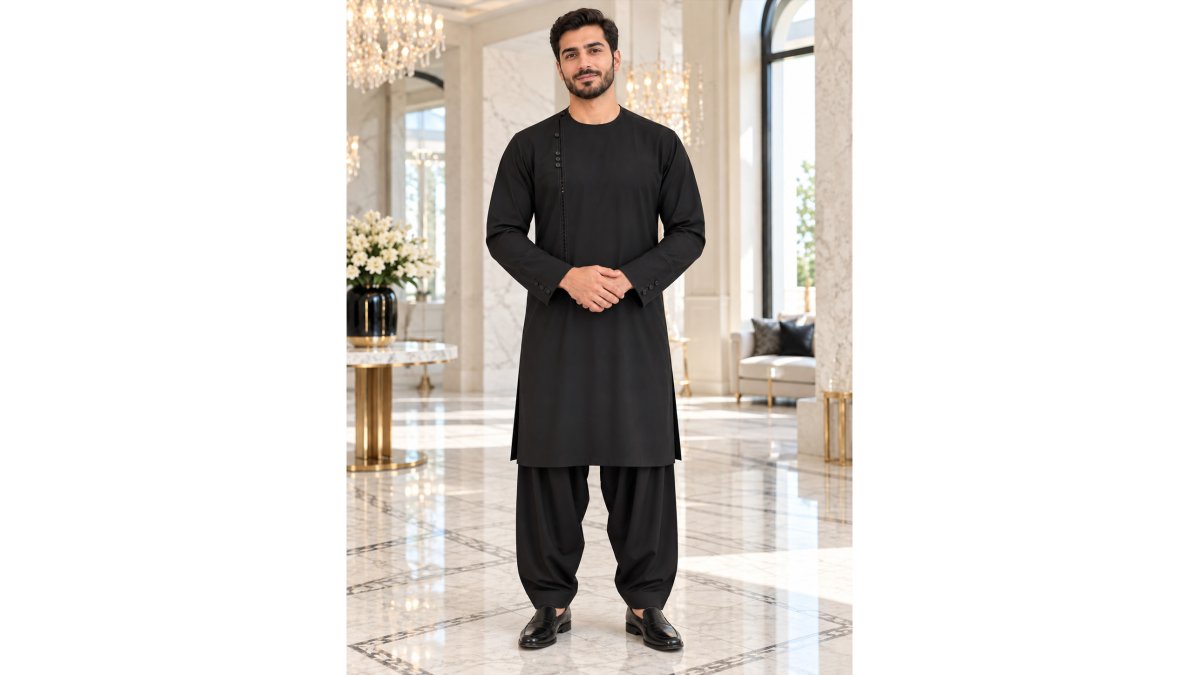
Here are the measurements to take:
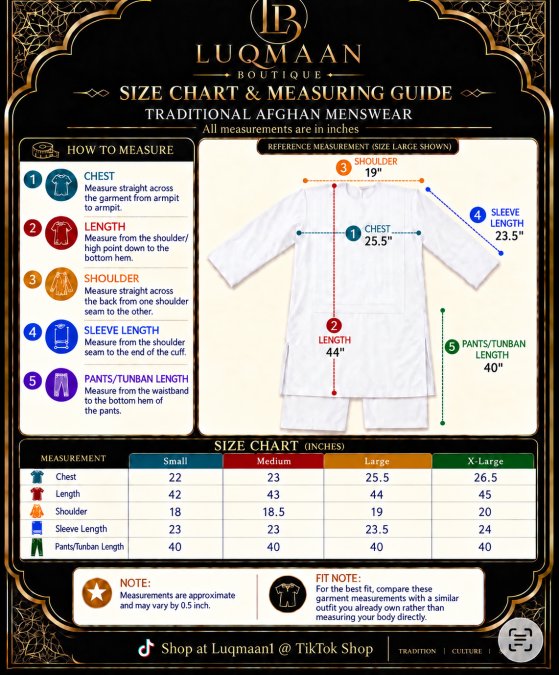
- Chest: Measure straight across your best-fitting Parahan, armpit to armpit. Do not wrap the tape around your body.
- Length: Measure from the shoulder/high point down to the bottom hem.
- Shoulder: Measure Straight across the back from one shoulder seam to the other.
- Sleeve Length: Measure from the shoulder seam to the end of the cuff.
- Pants/Tunban Length: Measure from the waistband to the bottom hem of the pants.
Chest, Length, Shoulder, Sleeve Length. These are the Numbers That Matter
These numbers decide whether a Parahan Tunban drapes correctly or pulls across the shoulders.
2. Read the Size Chart Before You Fall in Love With the Design
The size chart is the most important part of any listing, and the least read. Sizing discrepancies are the number one reason ethnic wear gets returned. Most charts list garment measurements, not body measurements, and a "Medium" from one maker can fit like a "Large" from another, always compare the chart to your numbers from step one.
Look for these details on every chart:
- Whether measurements are in inches or centimeters
- Whether the numbers describe the garment or the body
- Any note about fit tolerance, like "may vary by 0.5 inch"
- Whether the chart covers the full size run or only some sizes
3. Judge Fabric Quality and Color Accuracy From the Listing
Fabric composition tells you how a garment will feel, drape, and hold up, read it before the price. Color accuracy is the other trap: screens and lighting shift shades, so the white you see may read warmer in person.
How to Read a Fabric Spec Like a Buyer, Not a Browser
A fiber percentage is a starting point, not the whole story, two listings can both say "100% cotton" and behave differently depending on weave and weight. Look beyond the percentage:
- Weave type. Poplin, voile, chikankari cotton, and cambric all drape differently. Voile is sheer and airy; poplin is crisper and holds structure. If the listing names the weave, the seller knows the product.
- Weight, when listed. Fabric weight is often given in GSM (grams per square meter). Everyday cotton shirting falls in a mid-weight range; sheer dupatta fabrics sit much lighter. A heavier GSM usually means more opacity and structure.
- Thread count, when listed. Higher thread count means a tighter, smoother hand, but only within the same fiber.
- Lining. For occasion wear, check whether the piece is lined; an unlined sheer bodice needs a separate slip, which changes the fit and the price.
- Stretch. If the listing mentions elastane or spandex, note the percentage, a small amount adds recovery, a large amount changes the drape entirely.
A Simple At-Home Fabric Check
Once a piece arrives, sanity-check the fiber claim without a lab:
- The burn test (on a loose thread from an inside seam). Natural fibers like cotton and silk smell like burning paper or hair and leave soft ash; synthetics melt, smell plastic-like, and leave a hard bead. Do this outdoors, on a single thread, never on the garment itself.
- The wrinkle test. Squeeze a corner of the fabric in your fist and release. Cotton and linen hold the crease; polyester springs back.
- The light test. Hold the fabric up to a window to see how sheer it really is.
Getting Color Right Before You Commit
Screens vary: a photo edited on a warm-calibrated monitor looks different on your phone, and different again on a laptop. You cannot fully solve this, but you can reduce the risk:
- Ask for a daylight photo. Natural daylight, no flash, no filter.
- Ask for a photo next to a common reference object, a white sheet of paper, a coin, a hand, to give your eye a neutral anchor.
- Check your own screen. Turn off night mode and any blue-light filter before you judge a shade.
- Read the dye note. Hand-dyed and naturally dyed pieces vary batch to batch, a feature, not a defect, but know it is coming.
Synthetic vs Natural Fibers in Traditional Attire
Natural fibers like cotton and silk breathe well and age gracefully. Synthetic blends cost less and resist wrinkles, but they can trap heat.
4. Is Velvet Appropriate for Afghan Wedding Attire?
Yes, velvet is appropriate for Afghan wedding attire, especially for evening events in cooler months. It carries a richness lighter fabrics cannot match and signals formality without heavy embellishment. But it is warm, so it can feel heavy at a summer wedding, and it shows lint and creases and needs careful storage.
5. Verify Authentic Embroidery and Craftsmanship Before You Buy
Authentic embroidery has depth, irregularity, and visible handwork; mass-produced copies look flat and uniform. Machine embroidery can be beautiful, but it is not hand embroidery, and the listing should say which one you are getting.
Look for these signals of real craftsmanship:
Men’s White Qasimi Design Parahan →
- Close-up photos of the embroidery from multiple angles
- A clear description of the technique used
- Names of specific styles, like Shesha Yakhan or Khamak-inspired designs
- Photos of the back of the embroidery, which reveal handwork
6. Check Return Policies, Shipping Logistics, and Secure Payment
A clear return policy protects you when the fit or color is off, read it before you pay. Look for the return window, who pays return shipping, and whether customized items are excluded. Shipping matters too: if you need an outfit for a religious event in two weeks, confirm the delivery estimate and tracking. Secure payment is non-negotiable, pay through a platform that encrypts your card details, and avoid sellers who only accept direct transfers.
The Return Policy Details That Actually Decide a Dispute
Most shoppers read the return window and stop, but these clauses decide whether you get your money back:
- Who pays return shipping. A 30-day window is meaningless if return postage costs more than the garment. Check whether the seller issues a prepaid label or expects you to ship at your own cost.
- Condition requirements. Many policies require original tags attached and unworn condition, remove the tag and you may void the return.
- Restocking fees. Some sellers deduct a percentage for returns; that number belongs in your decision.
- Exclusions. Custom, made-to-measure, altered, and final-sale items are commonly excluded, as are pierced-earring-style items and anything marked "intimate."
- Refund vs. store credit. A store credit you will never use is not a refund.
- Return method. Some sellers require an authorization number by email before you ship anything back; skip it and the package can be refused.
Made-to-Measure and Custom Orders: The Logistics Nobody Explains
Custom and made-to-measure orders follow different rules than off-the-rack purchases, and this is where most buyers trip up. Confirm before you order:
- The measurement form. A serious seller sends a structured form asking for more than chest, waist, and length, typically shoulder width, sleeve length, armhole, and sometimes height and preferred hem. A single text box means a fit gamble.
- The measurement deadline. Many sellers allow a short window after checkout to submit or correct measurements; miss it and the order goes into production at whatever numbers were on file.
- Production time vs. shipping time. These are two separate clocks, three weeks to make plus two weeks to ship is a five-week order. Ask for both numbers.
- Approval photos. Ask whether the seller sends a photo of the finished piece before shipping; it is your last chance to catch a wrong measurement.
- Alteration allowance. Ask whether extra seam allowance is left for a local tailor to adjust.
- Cancellation cutoff. Once fabric is cut, most sellers will not cancel. Know the cutoff date.
Shipping, Tracking, and What Happens at the Border
For cross-border orders, the delivery estimate is often the seller's outbound time, not the time to your door. Ask:
- Which carrier and service level? Economy and express can differ by weeks.
- Is tracking end-to-end or only until export? Some economy services stop updating once the package leaves the origin country.
- Who pays duties and import taxes? The recipient is typically responsible for customs charges, confirm before you order.
- What is the declared value? This affects the duty you may owe; sellers who under-declare create a risk for you, not them.
- What happens if the package is lost? Confirm who bears responsibility and whether insurance is included.
Payment Methods and Your Rights
Pay through a platform that encrypts your card details, and avoid sellers who only accept direct transfers. Also:
- Credit and debit cards generally give the strongest dispute rights. Under the Fair Credit Billing Act, you can dispute charges for goods never delivered or materially different from the description, within your card issuer's time limits.
- PayPal and similar processors add buyer protection with their own dispute process and deadlines.
- Peer-to-peer transfers and gift cards offer essentially no recourse, treat a seller who insists on these as a warning sign.
- Keep the paper trail. Save listing screenshots, the size chart, the chat transcript, and the tracking number; this is what wins a dispute.
Here is a quick safety checklist for online shopping:
- Size chart is present and detailed
- Fabric composition is listed
- Return and exchange policy is written out, including who pays return shipping
- Custom-order measurement form and deadline are clear
- Production time and shipping time are quoted separately
- Duties and import taxes are addressed
- Delivery window fits your event date, with buffer
- Order tracking is offered end-to-end
- Payment goes through a secure, encrypted checkout with dispute rights
- Customer support contact is easy to find
7. How to Care for Embroidered Ethnic Garments After They Arrive
Learning how to care for embroidered ethnic garments protects your investment, embroidery is delicate, and heat is its enemy. Wash most pieces on a cold, gentle cycle (hand washing is safer for heavy handwork), turning the garment inside out first. Skip the dryer, since heat shrinks fibers and distorts stitching, and lay the piece flat to dry in the shade.
For storage:
- Fold rather than hang heavy embroidered pieces
- Use padded hangers if you must hang them
- Keep them away from direct sunlight
- Store with a breathable cotton cover, not plastic
Conclusion: Shop Traditional Attire With Confidence
Shopping for traditional attire online comes down to preparation. Measure yourself, read the chart, check the fabric and craftsmanship, and confirm the return policy before you buy.
Frequently Asked Questions
How do I ensure the fit is correct when buying ethnic wear online?
Start by taking your chest, waist, and length measurements with a soft tape, then compare them to the seller's size chart rather than your usual clothing size. For traditional attire like Parahan Tunban sets, check the garment measurements straight across, not around the body. If you are between sizes, size up for a relaxed fit. Luqmaan Boutique lists detailed measurements for each piece, so you can match them to a similar outfit you already own before ordering.
What should I look for in product descriptions to confirm authentic embroidery?
Look for specific language about hand embroidery versus machine work. Listings for authentic pieces often mention hand-embroidered chest, neckline, and sleeve details, and may include close-up photos of the stitching. For example, Luqmaan Boutique's designer hand-embroidered Parahan Tunban with Shawl describes embroidery made by hand and recommends hand washing to protect it. Vague terms like 'embroidered look' without photos or method details are a warning sign.
What are the best practices for returning ethnic wear if it does not fit?
Before ordering, read the return and exchange policy carefully, noting the window, condition requirements, and who pays return shipping. Keep the original packaging and tags until you have tried the item on. If the piece does not fit, start the return promptly and use trackable shipping. For made-to-order or customized items, return options are often limited, so confirm sizing twice before purchase. Contact customer support early if you are unsure about the process.
How do I distinguish between machine-made and handcrafted ethnic details?
Handcrafted embroidery usually shows slight variations in stitch tension and pattern alignment, while machine work is uniformly precise. Ask for close-up photos of the embroidery and check whether the listing specifies hand embroidery or machine embroidery. Authentic pieces may also name traditional techniques such as Khamak or Shesha Yakhan. If a seller cannot provide detail shots or describe the method, treat the item as mass-produced until proven otherwise.