

Afghan Men's Traditional Clothing 101: The Essential Wardrobe Pieces
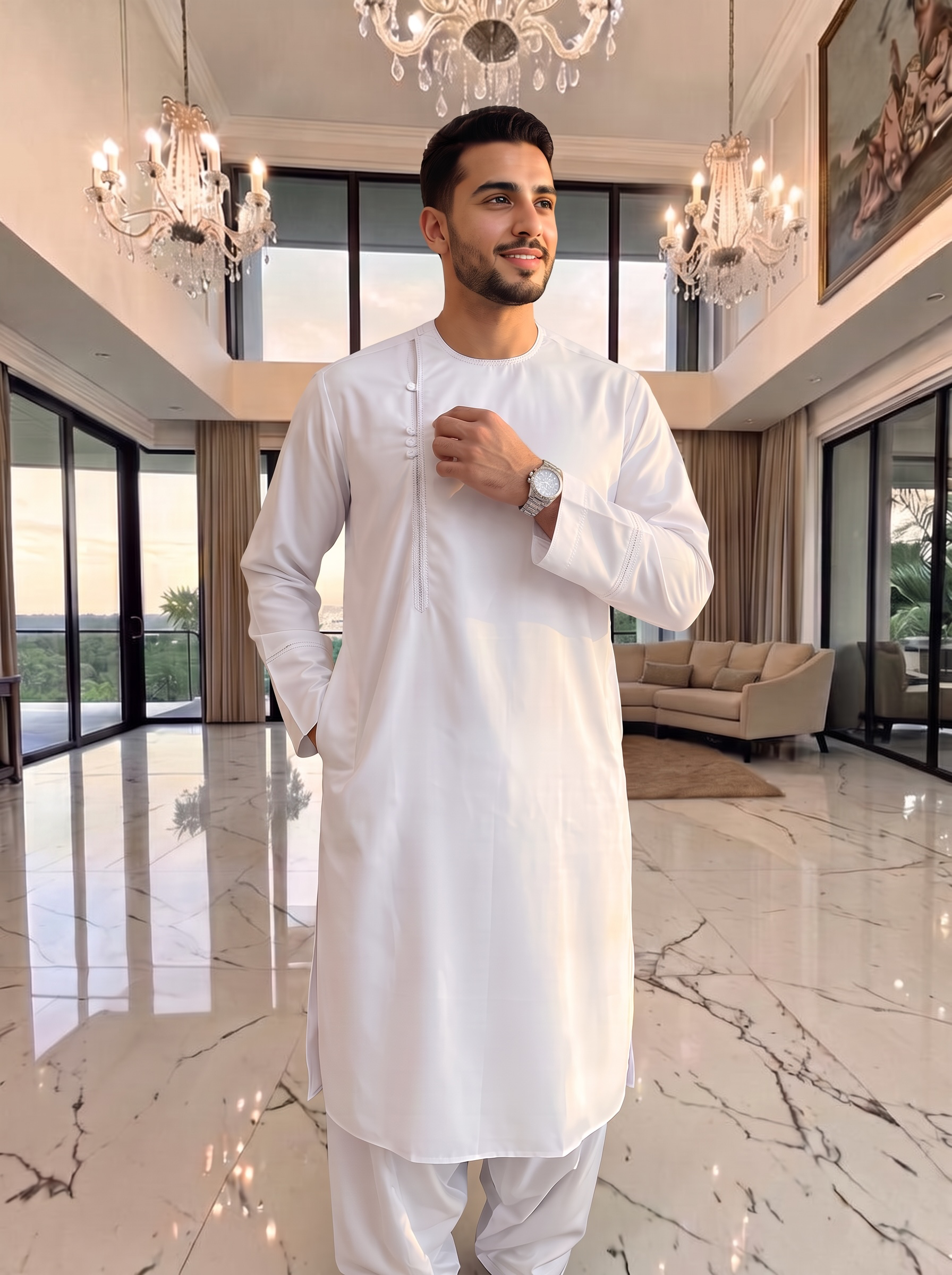
Afghan Men's Traditional Clothing 101: The Essential Wardrobe Pieces
Afghan men's traditional clothing is more than a garment — it is a statement of heritage, craftsmanship, and quiet confidence. For men of Afghan and South Asian heritage, wearing these pieces carries a sense of belonging that modern tailoring cannot reproduce. Yet for a first-time buyer, the terms can feel unfamiliar: Perahan Tunban, tunban, waistcoat, chadar, pakol. What fits where? And how do you build a wardrobe that is both authentic and refined?
This beginner's guide walks you through the essentials of Afghan men's clothing, piece by piece, and shows you how to put together a wardrobe that honors tradition while suiting a modern man's daily life.
The Perahan Tunban: The Foundation of Afghan Menswear
Beginner-focused searches for "perahan tunban" and "tunban" reflect how central this set is to Afghan culture. The Perahan Tunban is a two-piece outfit — a loose shirt and matching trousers — that forms the everyday and ceremonial base of Afghan menswear.
The Perahan (the shirt)
The Perahan is a loose-fitting, collarless shirt that reaches the knee, cut generously for comfort and breathability. It is traditionally embroidered with hand-finished Khamak and quilted stitching along the neckline, collar, and chest. In Afghan tailoring, these embroidered panels are the mark of quality — the finer and more complex the stitch, the more distinguished the garment.
The Tunban (the trousers)
The tunban is the matching trouser, gathered at the waist with a drawstring and tapering toward a slim ankle. The cut allows full freedom of movement, which is why the set is worn for everything from daily life to weddings and festivals.
Embroidered 3-Piece and 2-Piece Sets
For a complete dressing option, many modern wardrobes start with an embroidered Perahan Tunban set. A three-piece set adds a matching chadar shawl, giving you a celebration-ready ensemble in a single purchase. A two-piece set, such as one in rich hand-finished brown, offers a streamlined daily option that still keeps the embroidery detail.
The Afghan Waistcoat: Layering With Character
No Afghan outfit is complete without a waistcoat. This sleeveless outer layer, often richly embroidered, adds structure and formality to the Perahan underneath. On cooler evenings, a waistcoat worn over the tunban elevates a simple set into something fitting for Eid, gatherings, and family occasions.
Known in search as the "afghani vest," an embroidered waistcoat is a classic way to tie the whole ensemble together — a staple you will reach for again and again whenever an occasion calls for a little more polish.
The Chadar: The Ceremonial Shawl
The chadar is a supple shawl draped over the shoulders, most often worn at weddings and religious occasions. In a three-piece set, this shawl matches the embroidery of the Perahan and tunban, joining the whole outfit into a single, cohesive statement. It is more than decorative — it adds an elegant line to the silhouette and, in many regions, a mark of respect for the occasion.
For a big event, choose a set with the chadar included rather than styling it separately. Matching embroidery reads as intentional and looks far more polished than a random wrap.
Traditional Men's Headwear: Pakol, Karakul, and the Baluchi Cap
Headwear completes every Afghan wardrobe and adds meaning to the outfit.
- The wool pakol is a rolled, woolen cap worn across the mountains of Afghanistan and Pakistan, known for warmth and understated style. Interest in the "wool pakol" and "wool pakol hat" has grown as more men rediscover its quiet elegance.
- The karakul is a rounded cap made from the fur of the Karakul sheep, often reserved for formal and ceremonial settings.
- The handmade Afghan Baluchi is a woven regional cap known for its flexible shaping and careful stitchwork.
Choosing the right headwear ties the whole look together. A handmade Afghan Baluchi cap pairs beautifully with both a casual tunban and a more formal set.
The Modern Fit: Wearing Traditional Afghan Clothing With Confidence
Traditional garments can be cut for a refined, modern silhouette, so you don't have to choose between heritage and fit. When you shop, look for sets tailored to a contemporary form with elegance, and choose fabrics that move well.
From the embroidered collar of the Perahan to the clean line of the tunban, the goal is balance: stay authentic to Afghan tailoring while refining the proportions so you can wear these pieces with confidence.
Choosing Your First Complete Outfit
If you are new to Afghan menswear, start with a single embroidered Perahan Tunban 3-piece set, with its matching chadar included, plus a traditional hat. That is a complete, event-ready wardrobe in three pieces. Add a waistcoat next and you will have layers for everything from everyday wear to large gatherings.
Where to Start
At Luqmaan Boutique, we specialize in authentic eastern wear with a premium finish — from embroidered Men's Perahan Tunban 3-piece sets with matching chadar, to handmade Afghan Baluchi caps. Every piece is selected for genuine craftsmanship, premium fabrics, and details made to be passed down. Begin with our men's collection to build a wardrobe that honors heritage and embraces the modern.
Build your Afghan wardrobe one piece at a time, and enjoy a look that never goes out of style.