

Best Afghan Style Clothing for Kids: 8 Picks for 2026
Table of Contents
- Quick Comparison: Best Afghan Clothing for Kids
- What Makes Afghan Clothing for Kids Authentic
- 1. Sage Green Embroidered Parahan Tunban Set (Design #24)
- 2. Sky Blue Embroidered Shalwar Kameez Set (Design #23)
- 3. Forest Green Yakhandozi Parahan Tunban Set (Design #24)
- 4. Olive Green Parahan Tunban Set (Design #23)
- Traditional Afghan Kuchi Dress for Girls: Choosing a First Dress
- Styling Afghan Jewelry for Formal Weddings
- Frequently Asked Questions
Last Updated: September 16, 2026
Quick Comparison: Best Afghan Clothing for Kids
Finding the best Afghan style clothing for kids means balancing authentic craftsmanship, comfortable fabric, and a fit that survives a full day of celebration. This guide from Luqmaan Boutique walks through eight hand-embroidered picks, from sage green Parahan Tunban sets to a first Kuchi dress for girls.
Here is the short version before we get into the details.
Pick |
Color & Style |
Price |
Best For |
|---|---|---|---|
Sage green, embroidered |
$34.99 |
Eid and wedding wear |
|
Sky Blue Shalwar Kameez (Design #24) |
Sky blue, embroidered |
$34.99 |
Matching brothers |
Forest Green Yakhandozi (Design #24) |
Forest green, Yakhandozi |
$34.99 |
Formal family photos |
Olive Green Parahan Tunban (Design #23) |
Dark olive, silver-toned embroidery |
$49.99 |
Statement festive wear |
Sky Blue Set (Design #23) |
Sky blue, embroidered cuffs |
$34.99 |
Engagements and gatherings |
Sage Green Set (Design #23) |
Sage green, embroidered |
$34.99 |
Everyday cultural wear |
Forest Green Set (Design #23) |
Forest green, embroidered |
$34.99 |
Weddings and Eid |
Olive Green Set (Design #24) |
Dark olive, geometric embroidery |
$39.99 |
Cultural events |
Every set above is sized for ages 1 to 12 and made from soft, breathable fabric.

What Makes Afghan Clothing for Kids Authentic
Authentic Afghan children's clothing rests on four pillars: traditional construction (a Parahan tunic paired with a Tunban trouser), hand-guided embroidery rather than printed patterns, fabric chosen for breathability and skin comfort, and regional embroidery traditions that carry meaning beyond decoration. Most product listings stop at the first two. The last two are where parents actually learn to tell a heritage piece from a costume.
Fabric Quality and Material Sourcing
Children's skin is more reactive than adults', so the fabric matters as much as the embroidery. The three materials you will encounter most often in Afghan kids' wear are:
- Cotton (most common): Lightweight, breathable, and machine-washable. Look for a soft hand-feel and a tight weave, loose weaves pill quickly after a few washes. Cotton is the safest first purchase for children under five.
- Cotton-silk blends: Warmer and dressier, with a subtle sheen that photographs well. Blends hold embroidery better than pure cotton but require gentler washing (cold water, air dry).
- Velvet and heavier weaves: Reserved for formal winter pieces and Kuchi-style bodices. Beautiful, but heavy, a velvet bodice on a toddler is a two-hour outfit, not an all-day one.
Regional Embroidery Traditions Behind the Patterns
Afghan embroidery is not one style, it varies by region and heritage, and knowing the difference helps you choose pieces with real cultural grounding.
- Khamak: Fine counted-thread work, traditionally associated with Kandahar and surrounding areas. Dense geometric and floral motifs, usually concentrated on a chest panel. On kids' pieces, Khamak-inspired work appears on the front placket, cuffs, and collar.
- Yakhandozi: A style of raised, textured embroidery often worked in repeating geometric bands. It reads as more formal than flat stitching, which is why it shows up on wedding and portrait pieces.
- Kuchi (nomadic) work: Associated with Pashtun and Kuchi heritage. Characterized by bold color, mirror work, and dense embellishment across the bodice. This is the tradition behind the Kuchi dresses covered later in this guide.
When you examine a piece, look for these signals:
- Thread density: genuine work packs stitches tightly, so no base fabric shows through the motif
- Reversibility: turn the garment inside out. Hand-guided embroidery leaves a slightly messy reverse side; printed fabric leaves nothing at all
- Motif continuity: patterns should flow across seams without breaking or misaligning
- Weight: embroidered panels feel heavier than the surrounding fabric, not lighter
That single check eliminates most imitations.
1. Sage Green Embroidered Parahan Tunban Set (Design #24)
The sage green Parahan Tunban set is the strongest all-round pick in this collection. It pairs a soft, muted green with traditional embroidery on the chest and sleeves, and the relaxed tunban trousers let kids run, sit, and eat without constant readjustment.
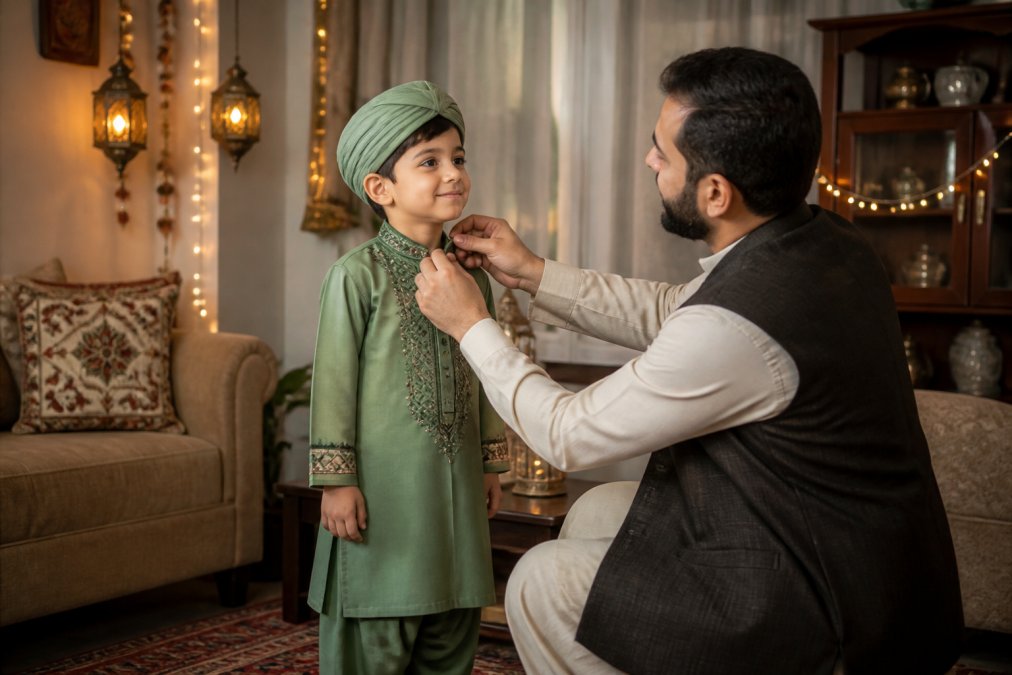
2. Sky Blue Embroidered Shalwar Kameez Set (Design #23)
Sky blue reads as celebratory without being loud, which is why this set works well for brothers dressing to match. The embroidered chest panel and matching sleeve accents sit on a classic Afghan silhouette, and the relaxed-fit tunban keeps the outfit comfortable through a full day.
3. Forest Green Yakhandozi Parahan Tunban Set (Design #24)
Yakhandozi embroidery is the detail that sets this forest green set apart. The work runs across the chest and cuffs, and the deeper green holds up well in photographs, which is why it tends to be the pick for wedding parties and formal portraits.
Kids Afghan Parahan Tunban Set →
4. Olive Green Parahan Tunban Set (Design #23)
Olive green is the most versatile color in this lineup. Silver-toned embroidery on the chest and sleeves gives it a slightly more formal edge than the sage or sky blue options, and the geometric motifs reflect traditional Afghan craftsmanship.
Traditional Afghan Kuchi Dress for Girls: Choosing a First Dress
For families who want the embroidered look without full mirror-work weight, a hand-embroidered kids' set in a vibrant color delivers the same cultural presence with far more comfort for younger children.
Styling Afghan Jewelry for Formal Weddings
Afghan jewelry for formal weddings works on one rule: pick a single focal piece and let the outfit carry the rest. Children's traditional sets already have embroidered chest panels, so heavy necklaces compete rather than complement.
Mixing Traditional Pieces With Modern Western Clothing
You do not have to choose between a full traditional set and everyday clothes. Most families get more wear out of Afghan pieces by layering them into a modern wardrobe:
- Embroidered tunic over jeans or leggings: The Parahan tunic works as a long top over slim denim. This is the easiest way to bring a heritage piece into school or a casual family gathering.
- Embroidered waistcoat over a plain tee and chinos: For boys, a waistcoat layer reads as festive without requiring the full Tunban trouser.
- Embroidered set for photos, modern clothes for the party: Many parents dress children in the full traditional set for the ceremony and portraits, then switch to a comfortable modern outfit for the reception. Buying one traditional set and one everyday outfit is often cheaper than buying two traditional sets.
Size Conversion and Measurement for International Buyers
Traditional Afghan cuts run differently from standard US children's sizing, so converting by age alone is unreliable. Measure your child's chest, waist, and height in inches (or centimeters, if the size chart uses them) and compare against the chart on each product page.
A practical approach:
- Measure the chest at the fullest point, the waist at the natural waistline, and the height from the top of the head to the floor.
- Add roughly one to two inches of ease to the chest and waist measurements, since traditional cuts have very little stretch.
- Match the height measurement to the size range first, then confirm the chest and waist fit within that size.
- When in doubt between two sizes, size up. A hem can be taken up; a too-small chest panel cannot be let out.
Frequently Asked Questions
What are the traditional components of Afghan clothing for children?
A traditional Afghan outfit for boys usually pairs a Parahan (a long tunic) with a Tunban (loose trousers), often called a shalwar kameez in other regions. Embellishment is what distinguishes the look: chest panels, sleeve cuffs, and collars carry intricate patterns, and Khamak-style embroidery adds cultural depth. Cotton and soft blended fabrics keep these layers comfortable for active children.
How do I choose comfortable Afghan-style outfits for active kids?
Look for relaxed-fit tunban trousers, breathable fabric, and embroidery that sits flat against the skin rather than scratching. A Parahan Tunban set with a loose silhouette lets children run, sit on the floor, and play without restriction. Check the size chart before ordering, since traditional cuts run differently from standard kids' sizing. Lighter colors and single-layer construction work well for daytime events, while a lined or heavier set suits evening weddings.
What is the difference between Kuchi-style dresses and formal Afghan attire for children?
Kuchi-style dresses draw on the ornamentation of nomadic Afghan communities, with bold mirror work, dense embroidery, and layered skirts in vibrant colors. Formal Afghan attire for children tends to be more restrained: a structured Parahan Tunban set or a dress with a single embroidered panel in a solid tone. Kuchi-inspired pieces suit cultural festivals and photoshoots, while formal sets fit weddings, Eid gatherings, and religious occasions where a polished, understated look is preferred.
What fabrics are best for authentic Afghan-inspired children's clothing?
Breathable cotton and soft blended fabrics work best for children, especially for long events where they sit, stand, and move for hours. These materials hold embroidery well without stiffening, and they tolerate repeated washing. Avoid heavy synthetic fabrics that trap heat, since Afghan outfits often include a tunic layer over trousers. If you are buying for a summer wedding, a lightweight cotton set in a light color keeps a child comfortable while still looking dressed up.
How can I style Afghan jewelry with traditional outfits for formal events?
Keep the jewelry proportionate to the child and to the outfit's embroidery. If the dress or Parahan already has a dense embroidered chest panel, choose one focal piece such as a delicate pendant or small bangles rather than layering several statement items. For weddings, silver-toned pieces pair well with green, blue, and olive outfits. Skip heavy earrings for younger children and opt for hair accessories or a simple bracelet that stays secure through the event.