

Best Materials for Authentic Afghan Wear: 2026 Review
Table of Contents
- Why Fabric Choice Defines Authentic Afghan Wear
- Afghan Traditional Dress Fabrics Compared Side by Side
- Cotton and Linen: Everyday Afghan Wear That Breathes
- Silk, Blends, and Velvet: Formal Afghan Wear Materials
- Matching Materials to Afghan Wedding Attire for Women and Men
- How to Care for Embroidered Afghan Clothing
- Sourcing, Authenticity, and What Your Money Buys
- Top Picks in Authentic Afghan Wear for 2026
- Frequently Asked Questions
Last Updated: October 4, 2026
Why Fabric Choice Defines Authentic Afghan Wear
Walk into any Afghan family celebration and you can spot the difference in seconds. The best materials for authentic afghan wear are not a small detail; they decide how a garment moves, how it photographs, and whether it still looks right after the third Eid.
Afghan traditional dress is a layered tradition, not a single uniform. Regional dress varies from province to province, and Central Asian clothing traditions share DNA with Pashtun clothing and tribal textiles. What ties it together is structure.
That last point is where cheap fabric gives itself away. Acrylic serge feels stiff and shiny under bright light. Thin printed fabric loses shape after a single wash. A handwoven fabric or a good cotton blend behaves differently, softening with wear instead of collapsing.
Below, we break down how the main fabric families compare, which ones suit everyday wear versus formal wear, and how to care for each. We also flag the sourcing questions worth asking before you spend money.
Afghan Traditional Dress Fabrics Compared Side by Side
The four fabric families that dominate authentic Afghan wear are cotton, linen, silk, and velvet. Cotton and linen handle everyday wear. Silk and velvet carry formal wear. Blends sit between them, trading a little purity for durability and price.
Here is how they stack up on the properties that actually matter.
| Fabric | Weight & Breathability | Drape | Durability | Best For | Care |
|---|---|---|---|---|---|
| Cotton | Light, highly breathable | Soft, relaxed | High with quality weave | Everyday wear, summer | Machine wash cold |
| Linen | Light, most breathable | Structured, slight crease | Very high | Hot climates, casual | Machine wash cold, hang dry |
| Silk | Light to mid, low breathability | Fluid, luxurious | Moderate | Formal wear, weddings | Dry clean or hand wash |
| Velvet | Heavy, low breathability | Deep, sculptural | High if pile cared for | Winter weddings, evening events | Dry clean preferred |
| Blends | Mid-weight, moderate | Depends on ratio | High | Versatile daily pieces | Machine wash gentle |
Weight, Weave, and Drape at a Glance
Weight decides season. Drape decides silhouette. Weave decides how long the garment survives.
A light cotton or light linen in a plain weave is the standard for summer traditional garments. It lets air through and keeps the loose-fitting silhouette from clinging. Silk in a satin or crepe weave drapes close to the body, which is why it suits formal wear. Velvet's pile gives that deep, sculptural fall that photographs beautifully under evening light, but it holds heat.
Flax fibres give linen its structure and its crease. That crease is not a defect; it is the signature of the fibre, and it is why linen reads as relaxed rather than formal.
Cotton and Linen: Everyday Afghan Wear That Breathes
Cotton is the workhorse of everyday Afghan wear. It is breathable, affordable, and holds machine embroidery cleanly, which is why so many parahan tumban sets use a cotton blend as their base.
Linen does the same job in hotter conditions. It wicks moisture and dries fast, and it feels cooler against the skin than cotton in direct heat.
For children's traditional garments, cotton wins almost every time. It washes well, it does not irritate skin, and it survives the kind of wear that religious events and family gatherings put on clothing.
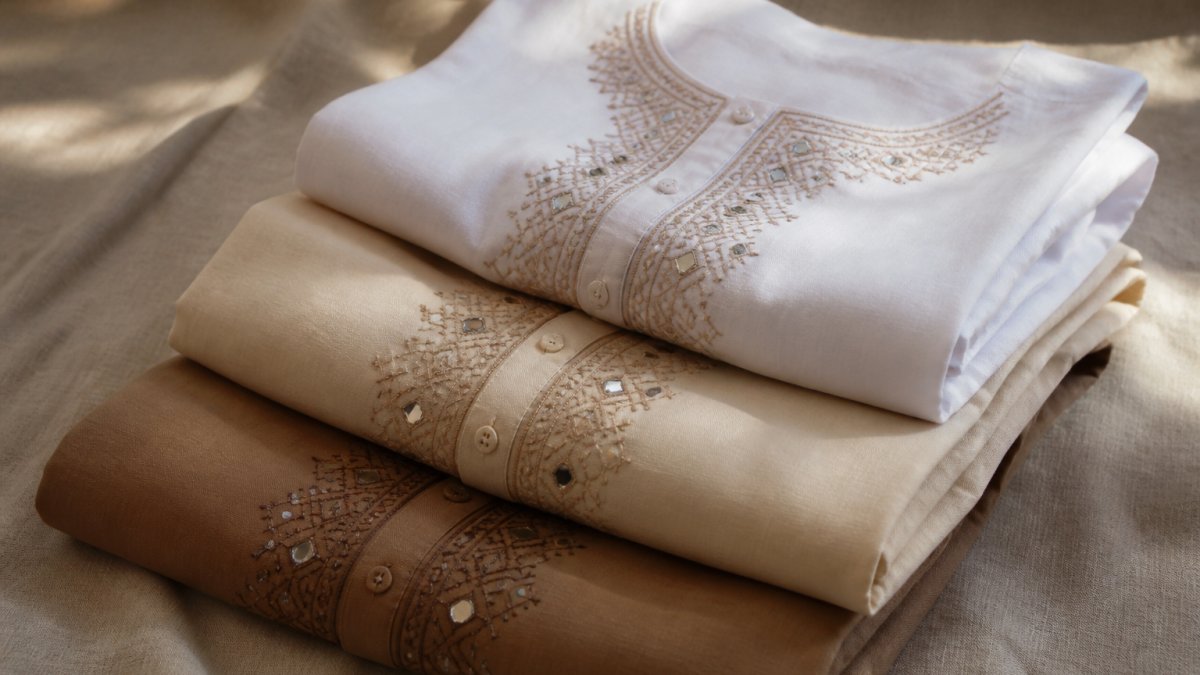
Our Medium White Afghan Parahan Tumban set is built on exactly this logic.

Silk, Blends, and Velvet: Formal Afghan Wear Materials
Silk and velvet are the two fabrics that signal occasion. Silk brings sheen and fluid movement. Velvet brings depth, warmth, and a richness that no flat weave can match.
Blends are the practical middle ground. A cotton-poly blend, for example, resists wrinkling better than pure cotton and costs less than silk, which makes it a sensible choice for outfits that need to look sharp after travel.
Is an Afghan Velvet Dress Right for Your Event?
An Afghan velvet dress works best for evening weddings, winter celebrations, and indoor formal events. Velvet's weight and pile make it a poor fit for hot outdoor gatherings, where it traps heat and shows every crease.
For daytime events, a lighter fabric with embroidery gives you the same visual impact without the discomfort. For an evening reception in cooler months, velvet is hard to beat.
Matching Materials to Afghan Wedding Attire for Women and Men
Afghan wedding attire for women and men follows different rules, and the fabric should follow the garment.
For women, silk and silk blends suit the main ceremony outfit, while velvet suits evening receptions and winter weddings. Embroidered and decorative fabric panels add detail without adding weight.
For men, the parahan tumban is the core silhouette. Our XL Beige Embroidered Afghan Parahan Tumban is a good example: a soft, durable cotton blend with machine-stitched embroidery across the chest, sleeves, and borders, in a warm beige that suits weddings, cultural events, and religious holidays.

Where men's outfits step up a level, hand embroidery and a matching shawl do the work. Our Men's Designer Hand-Embroidered Parahan Tunban is a three-piece set: parahan shirt, tunban pants, and a matching embroidered shawl, with detailed hand embroidery across the chest, neckline, and sleeves.
Medium White Afghan Parahan Tumban – Premium Cotton-Blend Embroidered Outfit →
For a middle option, the Small Men's Mocha Brown Hand Embroidered Parahan Tunban Set pairs hand embroidery with a coordinating shawl in a rich brown tone, at $129.95.
How to Care for Embroidered Afghan Clothing
How to care for embroidered Afghan clothing comes down to three rules: cold water, gentle agitation, and never the dryer.
Embroidery threads, especially metallic and mirror work, are the first thing to fail. Heat shrinks them. Tumbling abrades them. Harsh detergent dulls them. Hand washing in cold water with a mild detergent is the safest method, and it is what we recommend for any piece with hand embroidery.
For machine-embroidered garments, a cold, gentle cycle inside a mesh bag is acceptable. Turn the garment inside out first. Skip the dryer entirely and dry flat in shade, away from direct sun, which fades both dye and thread.
Shesha mirror work needs one extra step: check the stitching around each mirror after washing. If a thread has loosened, a few hand stitches will secure it before it pulls free.
- Turn garment inside out before washing
- Use cold water and mild detergent only
- Hand wash hand-embroidered pieces
- Never tumble dry
- Dry flat in shade
- Iron on low heat, inside out, avoiding embroidery
- Store folded along seams, not on hangers, for heavy fabrics
Sourcing, Authenticity, and What Your Money Buys
Authenticity in Afghan wear comes down to three things you can verify: the fabric, the embroidery method, and where the garment was made.
Hand embroidery takes time, and that time shows in the price. Machine embroidery can reproduce a pattern closely, and there is nothing wrong with it, but it should be described honestly.
Fabric sourcing matters just as much. A garment described only as "premium fabric" with no fibre content tells you nothing. Ask for the fibre breakdown.
On price, be skeptical of extremes. A hand-embroidered three-piece set with a shawl at a rock-bottom price usually means the embroidery is machine-made or the fabric is thin.
For context on textile labeling standards, the Federal Trade Commission's textile and wool rules explain what US sellers must disclose about fibre content and country of origin.
We also recommend checking the Smithsonian's textile conservation guidance if you own older family pieces and want to store them properly.
Top Picks in Authentic Afghan Wear for 2026
Our top pick for 2026 is the Men's Designer Hand-Embroidered Parahan Tunban with Shawl. It is a three-piece set with hand embroidery on the chest, neckline, and sleeves, and a matching embroidered shawl, at $134.95.
For everyday wear and warm weather, the Medium White Afghan Parahan Tumban at $109.99 is the better buy. The cotton blend breathes, the chest embroidery keeps it dressy, and it holds up to regular washing.
If you want a statement piece with a traditional detail that stands out in photographs, the Small White Cotton-Poly Shesha Mirror Work 2-Piece Afghan Outfit at $109.99 uses geometric mirror patterns on the front panel and sleeves while staying lightweight.

For a balance of hand embroidery and value, the Small Men's Mocha Brown Hand Embroidered Parahan Tunban Set with Matching Shawl at $129.95 includes the shawl and works across Eid, weddings, and Friday gatherings.
| Outfit | Price | Fabric | Embroidery | Best For |
|---|---|---|---|---|
| Designer Hand-Embroidered Parahan Tunban (3-piece) | $134.95 | Lightweight fabric | Hand | Eid, weddings, engagements |
| Mocha Brown Parahan Tunban with Shawl | $129.95 | Lightweight fabric | Hand | Eid, weddings, Friday gatherings |
| Medium White Parahan Tumban | $109.99 | Cotton blend | Machine, chest | Everyday wear, cultural events |
| XL Beige Parahan Tumban | $109.99 | Cotton blend | Machine, chest and sleeves | Weddings, holidays, daily wear |
| White Shesha Mirror Work 2-Piece | $109.99 | Cotton-poly blend | Mirror work | Cultural gatherings, ceremonies |
Choosing the right fabric is the difference between a garment you wear twice and one you pass down.
Frequently Asked Questions
What materials are traditionally used for Afghan clothing?
Cotton, linen, silk, velvet, and blended fabrics are the mainstays of Afghan traditional dress. Lightweight cotton and linen suit everyday wear because they breathe in heat, while silk and velvet appear in formal and wedding pieces. Handwoven fabric and artisan textiles often combine two or more fibers, and decorative fabric like acrylic serge shows up in lower-cost garments. The material you pick should match the occasion, the season, and how often you plan to wear the piece.
What fabric is best for Afghan wear in warm weather?
Lightweight cotton and light linens win for warm weather. Both allow airflow and manage moisture, which matters when you are wearing a loose-fitting parahan tunban for hours at a gathering. Cotton-blend sets, like the Medium White Afghan Parahan Tumban at $109.99, keep the traditional look while staying breathable. Avoid heavy velvet and dense silk in summer unless the event is indoors and air-conditioned. Loose silhouettes help, but the fiber underneath does most of the work.
Is velvet appropriate for Afghan wedding attire?
Yes. Velvet is a long-standing choice for Afghan wedding attire for women, especially in colder months and evening celebrations. The fabric holds deep color well, particularly red, green, and royal purple, and it gives embroidery a raised, dimensional look. The trade-off is weight and care: velvet traps heat and needs gentle handling. For a summer wedding, choose a lighter silk or embroidered cotton instead, and save the Afghan velvet dress for fall and winter events.
How can you tell whether embroidered Afghan clothing is well made?
Check the embroidery first. On hand-embroidered pieces, stitches sit evenly with no loose threads or skipped sections, and the pattern continues cleanly across seams. Look at the interior: a well-finished garment has neat seam allowances and reinforced stress points at the shoulders and underarms. Fabric should feel substantial without stiffness. Ask the seller for close-up photos of the actual item rather than stock images, and confirm the fiber content, since a cotton-blend and a polyester garment can look identical online.
How should embroidered Afghan clothing be cared for?
Hand washing in cold water is the safest method for anything with hand embroidery or mirror work. If you machine wash, use a cold, gentle cycle and turn the garment inside out. Skip the dryer entirely; heat shrinks cotton and distorts embroidery. Dry flat in shade to protect color. Iron on low from the reverse side, never directly on the stitching or mirrors. Store folded rather than hung so shoulder seams and embroidered panels keep their shape between wears.