

Where to Buy Authentic Shesha Yakhan: 2026 Guide
Table of Contents
- What Makes Shesha Yakhan Authentic
- How to Verify Authentic Shesha Yakhan Before You Buy
- Afghan Fashion Brands: What Sets Reputable Sellers Apart
- Handcrafted vs Machine-Embroidered Afghan Clothes
- Shesha Yakhan Pieces Worth Buying in 2026
- Pricing, Sizing, and Shipping: What to Expect
- Frequently Asked Questions
Last Updated: September 25, 2026
What Makes Shesha Yakhan Authentic
Authentic Shesha Yakhan is Afghan traditional attire defined by hand-set mirror embroidery, called shesha, worked into geometric patterns across the chest, sleeves, and borders of a parahan tunban. The mirrors are stitched by hand, not glued or printed, and the garment beneath them is cut in the traditional Afghan silhouette rather than a mass-market pattern.
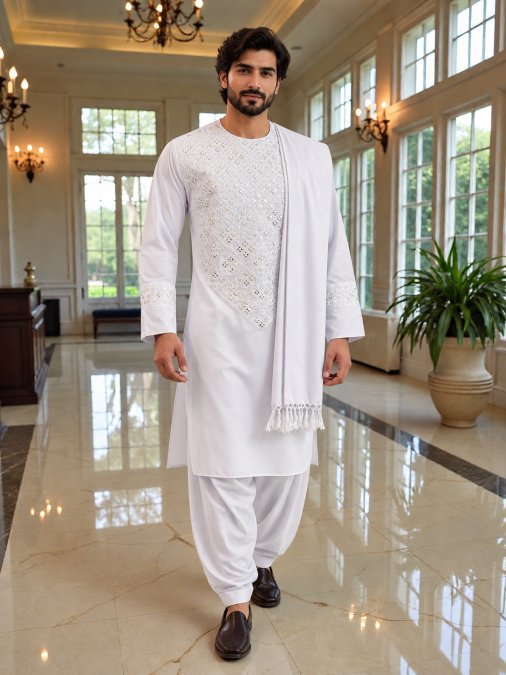
The craft carries real history. Mirror embroidery has decorated Afghan and broader Central Asian dress for generations. That longevity is the point: a genuine piece is built to be worn at multiple weddings, Eids, and family gatherings, not discarded after one event.
This guide from Luqmaan Boutique walks through how to tell real Shesha Yakhan from imitation, where reputable sellers operate, and what to check before you pay. Below, we cover the specific verification steps that separate a genuine piece from a convincing copy.
The Mirror Work Behind the Name
"Shesha" translates to mirror, and "yakhan" refers to the collar or neckline region where the embroidery traditionally sits. Together, the term describes a garment whose defining feature is reflective mirrorwork clustered around the chest and collar.
That placement matters. On authentic pieces, the mirrorwork follows a deliberate geometric layout, and the mirrors sit flush against the fabric. On cheaper imitations, the pattern is often stamped or printed, so the "mirrors" are flat and dull under light. Hold the piece up to a window: real mirrors catch and throw light back at you.
Signs of Genuine Craftsmanship
The fastest authenticity check is tactile. Run a finger across the embroidery. Hand-set mirrors have slight variation in spacing and depth because a person placed each one. Machine work is uniform to the millimeter.
Look for these markers of genuine craft:
- Mirrors that reflect light rather than printed foil that stays flat
- Even but not mechanically perfect stitch spacing
- Finished interior seams, not raw or fraying edges
- A lining or backing behind the mirrorwork so it does not scratch skin
- Consistent thread tension across the whole pattern
How to Verify Authentic Shesha Yakhan Before You Buy
Verification is where most buyers get burned, because a convincing listing photo tells you almost nothing about what will arrive. Work through four checks in order: the mirrorwork itself, the construction details, the seller's track record, and the transaction terms.
1. Inspect the mirrorwork under raking light. Tilt the garment so light hits it at a low angle. Hand-set mirrors sit slightly proud of the fabric and each one throws a distinct, bright reflection. Printed or foil imitations stay flat and dull, and the "mirrors" disappear when you move the piece. On a genuine piece, the mirrors also sit flush against the fabric with no glue halo or stiff patch around them.
2. Check the construction from the inside out. Turn the garment inside out. Authentic pieces have finished interior seams and a lining or backing behind the mirrorwork so the stitching does not scratch skin. Look for these markers:
- Backing fabric behind every cluster of mirrors
- Even but not mechanically perfect stitch spacing
- Consistent thread tension across the whole pattern
- No loose threads, glue residue, or raw, fraying edges
- Mirrors that are sewn, not glued or heat-pressed
3. Vet the seller, not just the product page. A reputable seller publishes item-level measurements (chest width, shoulder width, body length, sleeve length, pants length) rather than a generic size chart, states clearly whether each piece is handcrafted or machine-embroidered, and answers sizing questions before purchase. Look for a business address, a working phone or email, and reviews that mention fit and delivery, not just star ratings.
4. Confirm the transaction terms before you pay. Ordering traditional attire online carries fit risk, so a seller confident in their product will state a clear return window and who pays return shipping. Pay with a method that offers dispute resolution, such as a credit card or a platform with buyer protection, rather than a peer-to-peer transfer with no recourse.
A second common mistake is trusting a single close-up photo. Ask the seller for a photo of the full garment laid flat, plus a shot of the interior seams, before you buy.
If a seller cannot or will not provide those photos, treat it as a signal and move on. The Federal Trade Commission's guidance on online shopping and deceptive claims is a useful reference: sellers must describe products accurately, and "handmade" means handmade. A brand that blurs handcrafted and machine-embroidered work in its marketing is not just imprecise, it is misleading.
Afghan Fashion Brands: What Sets Reputable Sellers Apart
Reputable Afghan fashion brands distinguish themselves through transparency about construction, accurate sizing data, and responsive customer service, not through the size of their catalog.
The Federal Trade Commission's guidance on online shopping and deceptive claims is a useful reference here: sellers must describe products accurately, and "handmade" means handmade. A brand that blurs handcrafted and machine-embroidered work in its marketing is not just imprecise, it is misleading.
What separates a trustworthy seller in practice:
- They state whether each piece is handcrafted or machine-embroidered
- They publish full measurements per size, not a generic size chart
- They answer sizing and shipping questions before purchase
- They honor returns when fit is wrong
At Luqmaan Boutique, we publish item-level measurements for every Parahan Tunban, from chest width to pants length, so you can match a piece to your actual body before ordering.
Handcrafted vs Machine-Embroidered Afghan Clothes
Handcrafted and machine-Mirrored embroidered Afghan clothes differ in three practical ways: how the mirrorwork is set, how consistent the pattern is, and how the piece is priced and cared for. Neither is inherently inferior, but they suit different buyers.
Handcrafted pieces carry slight irregularities that signal human work, and they tend to cost more because of the labor involved. Machine- mirrored embroidered pieces deliver a cleaner, more uniform pattern at a lower price, and they are often more durable for frequent wear because the stitching is tighter and more consistent.
Feature |
Handcrafted |
Machine-Embroidered |
|---|---|---|
Mirror setting |
Hand-stitched, slight variation |
Uniform, machine-set |
Pattern consistency |
Organic, individual |
Precise, repeatable |
Price |
Higher, labor-intensive |
Lower, accessible |
Best for |
Heirloom pieces, formal events |
Regular wear, everyday use |
Care |
Gentle hand washing |
Standard careful washing |
The honest answer is that both belong in a wardrobe.
Shesha Yakhan Pieces Worth Buying in 2026
The pieces worth buying are below Parahan Tunbans with gold or white Shesha work, because these fabric makes the mirror detailing read most clearly and the silhouette works across weddings, Eid, and formal gatherings.
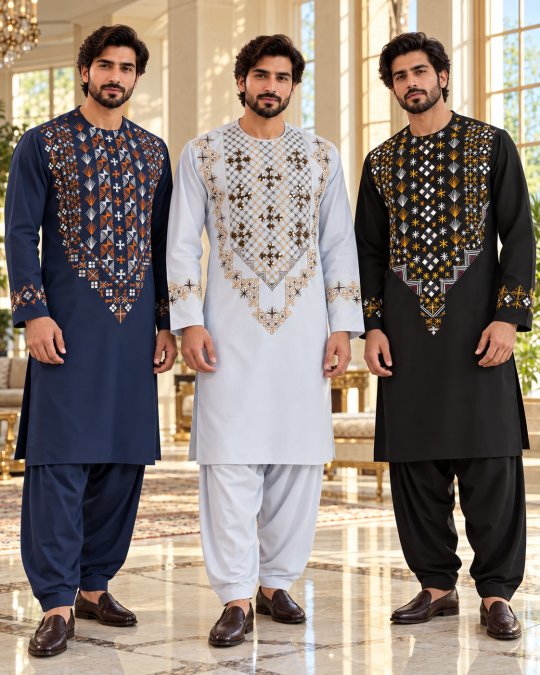
Infographic displaying the intricate gold mirror work of an authentic shesha yakhan in different color parahan tunban.
Pricing, Sizing, and Shipping: What to Expect
Pricing for authentic Shesha Yakhan is driven by three things: how the mirrorwork is set, the fabric, and the labor behind the piece. Understanding those drivers tells you whether a price is fair, and why a suspiciously cheap listing usually is.
What drives the price
- Mirror setting. Hand-stitched mirrorwork is the single biggest cost driver because each mirror is placed individually. Machine-set or printed mirrorwork costs a fraction of that labor.
- Fabric. Premium cotton blends and heavier weaves hold their shape and drape better than thin synthetics, and they cost more per yard.
- Construction. Finished interior seams, a backing behind the mirrorwork, and consistent thread tension all add labor time.
- Size range. Larger sizes use more fabric and more embroidery, which is why some sellers charge more above a certain size.
How to size correctly
- Chest width: measure across the fullest part of chest ( Parahan), then double it for the full circumference and add 4”
- Shoulder width: measure from the edge of one shoulder to the edge of the other, across the back.
- Body length: measure from the base of the neck to where you want the hem to fall.
- Sleeve length: measure from the shoulder seam to the wrist.
- Pants length: measure from the waistband to the desired hem and add 3”.
Shipping and delivery timelines
Frequently Asked Questions
How can you tell if Shesha Yakhan clothing is authentic?
Authentic Shesha Yakhan uses real glass mirrors stitched into the fabric, not printed or glued imitations. Check the reverse side: genuine mirror work shows hand-stitched thread anchoring each mirror, while mass-produced copies show flat adhesive or printed foil. Look for even spacing, secure stitching, and slight variation that indicates handwork. Reputable sellers describe their materials and construction openly, and a piece priced far below comparable listings usually signals printed imitation rather than real mirror work.
What is Shesha Yakhan embroidery?
Shesha Yakhan is traditional Afghan embroidery that sets small mirrors into fabric using decorative stitching. The mirrors catch light and create a shimmering effect across the garment, most often seen on the chest and sleeves of men's Parahan Tunban. The technique has been passed down through generations of Afghan artisans and appears on formal wear, wedding outfits, and celebration attire. Each piece carries slight variations because the work is done by hand or by machine following hand-guided patterns.
Is it safe to order authentic shesha yakhan clothing online?
Yes, provided you check the seller carefully. Look for clear product photos showing the mirror work up close, detailed sizing charts with actual measurements in inches, and a stated return policy. A secure checkout and responsive customer service are good indicators of a legitimate vendor. Ordering from a specialist Afghan fashion retailer gives you better odds of receiving authentic products than a general marketplace listing, where photos are often reused and quality varies between sellers.
How do I care for authentic Afghan-inspired garments?
Hand wash Shesha Yakhan pieces in cold water with a mild detergent, or use a gentle machine cycle inside a mesh bag. Turn the garment inside out to protect the mirror work, and avoid wringing or twisting the fabric. Dry flat in shade rather than in direct sunlight, which can dull the mirrors and fade dark dyes. Store folded with tissue between layers instead of hanging, since the weight of mirrors can stretch shoulders over time. Dry cleaning is preferred.
Dry Cleaning is preferred